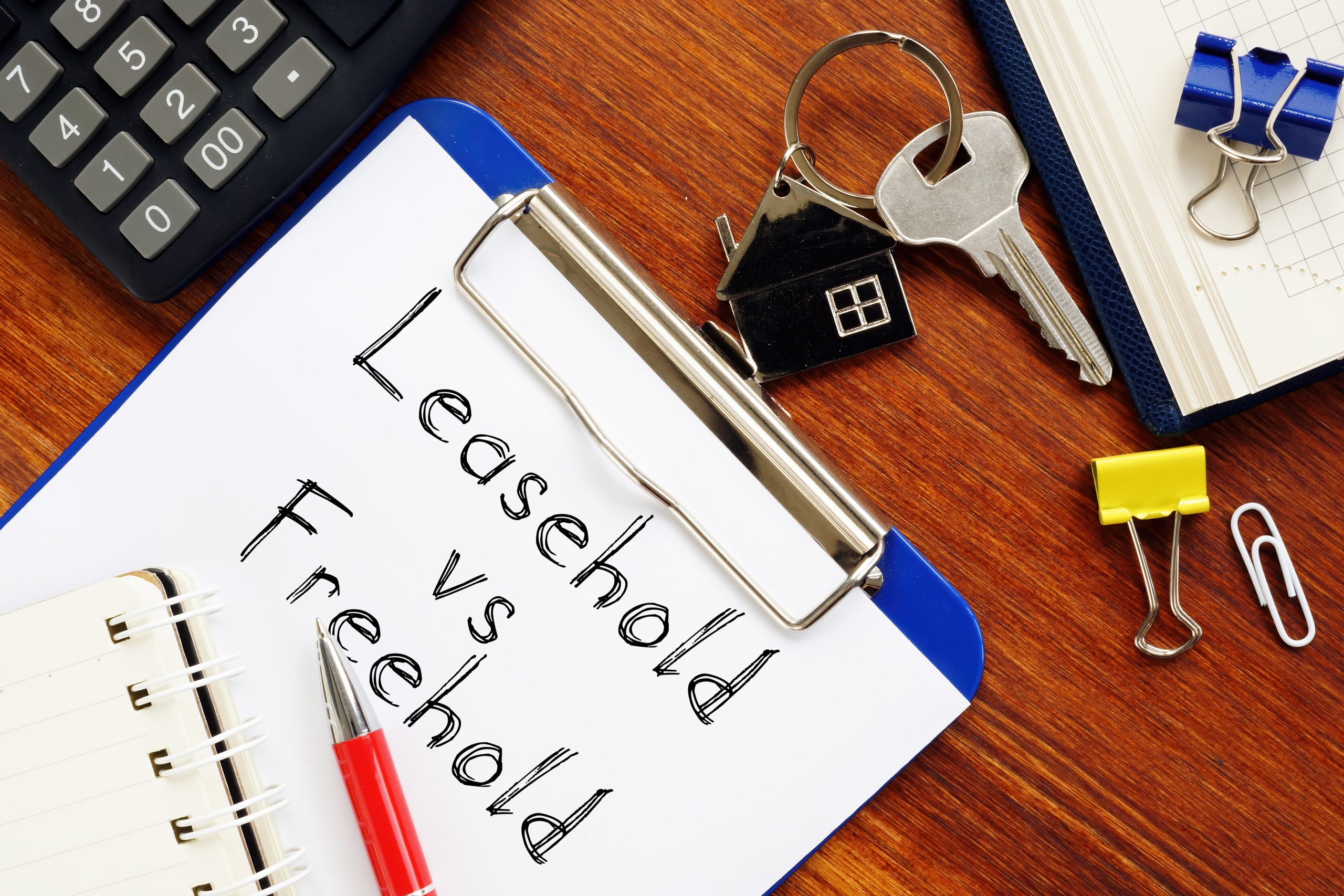
When you buy a property in England and Wales, you’re buying one of two things: the property and the land it sits on, or just the property itself. That distinction is the difference between freehold and leasehold, and it matters more than many buyers realise. Here’s what you need to know before you make an offer.
Quick Answer
- Freehold: you own the property and the land outright, with no time limit and no landlord
- Leasehold: you own the property for a fixed term but not the land, and pay ground rent and service charges to a freeholder
- Most houses are freehold. Most flats are leasehold
- Lease length matters. Below 80 years it becomes a problem. Below 70 years, mortgage lenders get nervous
What Is Freehold?
Freehold is the simpler of the two. When you buy a freehold property, you own the building and the land it sits on outright. There’s no landlord, no lease, and no time limit on your ownership.
You’re responsible for maintaining the property yourself, but you make your own decisions about it. You don’t pay ground rent or service charges to anyone. When you sell, you pass full ownership to the buyer.
Most houses in the UK are sold freehold. If you’re buying a house and it’s being sold leasehold, that’s worth questioning.
What Is Leasehold?
Leasehold means you own the right to occupy the property for the length of the lease, but not the land it stands on. The land is owned by the freeholder, sometimes called the landlord.
Leases are typically granted for long periods, often 99, 125, or 999 years, but the clock starts ticking from the date the lease was originally granted, not the date you buy. A property with a 125-year lease granted in 1990 has around 89 years remaining today.
As a leaseholder you’ll usually pay:
Ground rent. An annual charge paid to the freeholder. In older leases this can be a nominal amount. In some more recent ones it’s higher and can escalate over time.
Service charge. A contribution towards the maintenance, insurance, and management of the building and shared areas. Common in flats. Can range from a few hundred to several thousand pounds per year.
Management fees. Charged by a managing agent appointed by the freeholder to look after the building.
Why Lease Length Matters
The remaining length of the lease has a direct impact on the value and mortgageability of a leasehold property. Most mortgage lenders require a minimum of 70 to 85 years remaining at the end of the mortgage term, which in practice means they want to see at least 85 to 90 years remaining at the point of purchase.
Below 80 years, the cost of extending the lease increases significantly. This is because of a legal mechanism called marriage value, which gives the freeholder the right to a share of the increase in value that comes from extending the lease. Below 70 years, many lenders will simply refuse to lend.
If you’re considering a property with a short lease, get specialist advice before making an offer. A lease extension is possible but it takes time and costs money.
Can You Extend A Leasehold?
Yes. Leaseholders who have owned a property for at least two years have the legal right to extend their lease by 90 years on a flat, or 50 years on a house, under the Leasehold Reform Act.
The cost of extending depends on the remaining lease length, the ground rent, and the value of the property. Extensions on flats with leases above 80 years are typically less expensive. The closer the lease gets to 80 years, the more it costs to extend.
If you’re buying a leasehold property with a shorter lease, you can negotiate with the seller to either extend the lease before completion or reduce the purchase price to reflect the cost of doing so yourself.
Leasehold Reform: What’s Changing?
The law around leasehold in England and Wales has been changing. The Leasehold and Freehold Reform Act 2024 introduced a number of changes aimed at making leasehold fairer for homeowners, including restrictions on ground rent for new leases and improvements to the process for extending leases and buying the freehold.
If you’re buying a leasehold property, your solicitor should explain how any recent changes affect your specific situation. The legislation is ongoing and further reforms may follow.
What Is Share of Freehold?
Some leasehold flats are sold with a share of freehold. This means the leaseholders jointly own the freehold company, giving them collective control over the building, its management, and decisions about lease extensions.
Share of freehold is generally considered more desirable than a straightforward leasehold arrangement. It reduces the risk of unreasonable service charges and makes lease extensions more straightforward, as you’re effectively negotiating with yourself.
If you’re buying a flat, it’s worth asking whether a share of freehold is included or available.
Leasehold vs Freehold: Which Is Better?
For houses, freehold is almost always preferable. Leasehold houses have attracted significant criticism in recent years and many lenders are now cautious about lending on them.
For flats, leasehold is the norm and there’s nothing inherently wrong with it provided the lease is long enough, the service charge is reasonable, and the management of the building is competent. A well-managed leasehold flat with a 150-year lease is a perfectly sound purchase.
The key is to understand exactly what you’re buying before you commit. Your solicitor should review the lease in full, check the service charge history, and flag anything that gives cause for concern.
FAQs
Is leasehold bad?
Not necessarily. Most flats in England and Wales are leasehold and the majority are perfectly sound purchases. The key things to check are the remaining lease length, the annual service charge, the ground rent, and the quality of the building management.
What happens when a leasehold runs out?
If a lease runs to zero, ownership of the property technically reverts to the freeholder. In practice this is extremely rare as most leaseholders extend their lease long before it expires. If you buy with a long lease and extend it periodically, it should never become an issue.
Can I convert my leasehold to freehold?
For houses, yes. Leaseholders of houses have the right to buy the freehold under certain conditions, a process called enfranchisement. For flats, individual leaseholders cannot buy the freehold alone, but if a majority of leaseholders in a building agree, they can collectively purchase it through a process called collective enfranchisement.
What should I check before buying a leasehold property?
Check the remaining lease length, the annual ground rent and whether it escalates, the service charge amount and recent history, any major works planned for the building, and the quality of the managing agent. Your solicitor should review all of this as part of the conveyancing process.
What is ground rent and do I have to pay it?
Ground rent is an annual charge paid by a leaseholder to the freeholder. For leases granted after June 2022, ground rent on new residential leases must be set at zero under the Leasehold Reform Act. For older leases, ground rent may still apply and the amount varies significantly.
Find A Conveyancing Solicitor In Stockport
Buying a leasehold property involves more legal complexity than buying freehold. A good solicitor will review the lease thoroughly, flag any concerns, and make sure you know exactly what you’re buying. Compare conveyancing solicitors in Stockport to find one with experience in leasehold transactions.